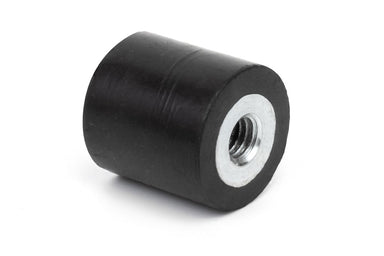
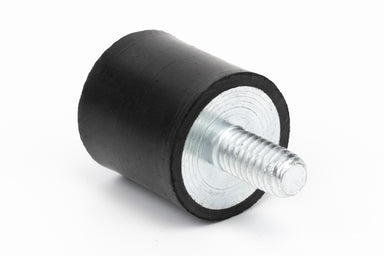
Cylindrical Vibration Isolators
At Enterprise Rubber, we manufacture a wide range of cylindrical vibration isolators designed for various industrial applications, including rubber bump stops that prevent metal-to-metal contact and vibration mounts that isolate machinery from unwanted movement and surrounding vibrations, along with threaded rubber solutions that help maintain smooth and efficient operations.
Rubber is highly effective for vibration control due to its excellent damping properties, allowing it to absorb and dissipate energy generated by mechanical movement, which reduces vibration transfer and helps protect sensitive equipment while improving overall system stability.
To achieve the best performance, it is important to select the appropriate rubber type and design based on factors such as vibration frequency, load capacity, and environmental conditions, ensuring reliable operation, reduced wear, and improved efficiency across both industrial and precision equipment systems.
Whether in industrial machinery or precision equipment, rubber is a valuable tool for managing and controlling vibrations, making systems more reliable, comfortable, and efficient.
Rubber Bump Stops
Rubber bump stops play a critical role in preventing damage, absorbing shock, and enhancing stability in various mechanical systems, particularly in industrial sectors.
The primary purpose of these bump stops is to limit the motion of a moving component, absorb energy from impact, and prevent excessive compression or extension of the system. They act as buffers between two surfaces, effectively reducing the force and stress transmitted between them.
Rubber bump stops find applications in industrial machinery and equipment. In manufacturing settings, bump stops are used to prevent the overtravel of moving parts, safeguarding both the machinery and the products being manufactured.
We manufacture rubber bump stops in various shapes, sizes, and configurations to suit specific needs. Depending on the application, softer or harder rubber compounds may be chosen to provide the optimal balance between cushioning and resistance to compression.
Rubber Vibration Mounts
Rubber vibration mounts are used to reduce and control the transmission of vibrations in various applications. These mounts are designed to isolate sensitive equipment, machinery, or structures from external vibrations, ensuring smoother operation, improved performance, and increased longevity.
Vibration mounts are typically made from high-quality rubber compounds that possess excellent damping properties. The rubber's elasticity and ability to absorb energy make it an ideal material for mitigating vibrations. These mounts come in a variety of shapes and sizes, with specific designs tailored to suit the unique needs of different systems.
In industrial settings, machinery can generate vibrations during operation. Excessive vibrations can lead to various issues, including reduced precision, accelerated wear and tear, and even structural damage. Vibration mounts act as a barrier between the machine and its foundation or surrounding environment, effectively isolating the machine.
The selection of the appropriate rubber vibration mounts depends on several factors, including the weight and size of the equipment, the frequency and magnitude of vibrations, and the specific environment in which the mounts will be used. Some mounts are designed to provide both vibration isolation and shock absorption capabilities, making them versatile for a wide range of applications.
Bushings
Bushings are integral components used in mechanical systems to provide cushioning, reduce friction, and absorb shocks and vibrations. These versatile components consist of a cylindrical shape made from high-quality rubber material, typically bonded to a metal sleeve or core. The combination of rubber's elasticity and the support of the metal core makes bushings essential in various applications.
In industrial applications, bushings are used to isolate machinery and equipment from vibrations, reduce noise, and protect components from excessive friction. For example, in manufacturing plants, these bushings are often employed in conveyor systems, where they provide a flexible and durable connection between moving parts, preventing metal-to-metal contact and minimizing the transmission of vibrations throughout the system.
Vibration Bushings
Vibration bushings help isolate vibration and reduce noise by adding a resilient rubber interface between components, especially in assemblies where movement, impact, or wear can occur over time. Depending on design, they can also act as spacers or sleeves to minimize friction and protect hardware while maintaining alignment in the system.
Selection & Applications
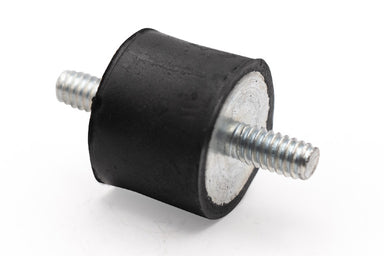
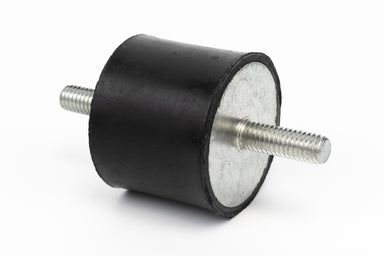
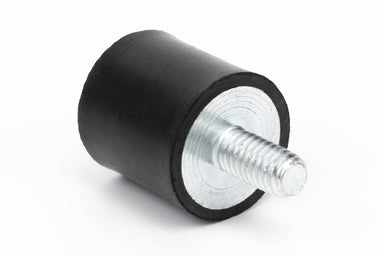
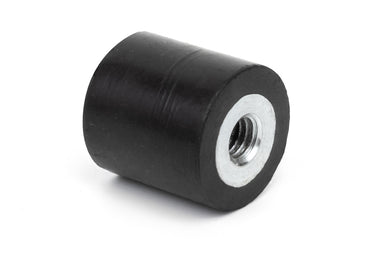
Cylindrical mounts are designed to reduce vibration transfer, provide shock absorption, and help prevent metal-to-metal contact in equipment assemblies. Selection typically depends on load, vibration frequency and magnitude, and the operating environment.
Use the filters to narrow options by:
- Configuration: male/male, male/female, female/female, or one-end designs
- Thread/Insert Type: inch or metric options to match your hardware
- Diameter & Height: fit constraints and isolation requirements
- Durometer (Hardness): balance isolation vs. compression resistance
- Material: match environmental conditions such as temperatureand exposure