



Precise Material Testing: How to Check Durometer of Rubber
Industrial rubber manufacturing requires a high degree of precision to ensure every component performs according to its engineered intent. One of the most critical metrics in this process is hardness, which is technically measured as durometer. Knowing how to check durometer of rubber is essential for engineers and quality control teams who must verify that a material can withstand specific mechanical loads without premature failure.
Hardness is not an absolute property like density or boiling point. Instead, it is a measurement of a material's resistance to surface indentation. At Enterprise Rubber, we utilize standardized testing to ensure our molded products meet the exact Shore hardness requested by our clients.
 Vibration Isolators 1" x 3/4" | Natural Rubber $2.59
  Rubber Vibration Mount 1" x 1/2" | Natural Rubber $2.79
  Vibration Isolators 3 1/8" x 3" | Natural Rubber $29.99
 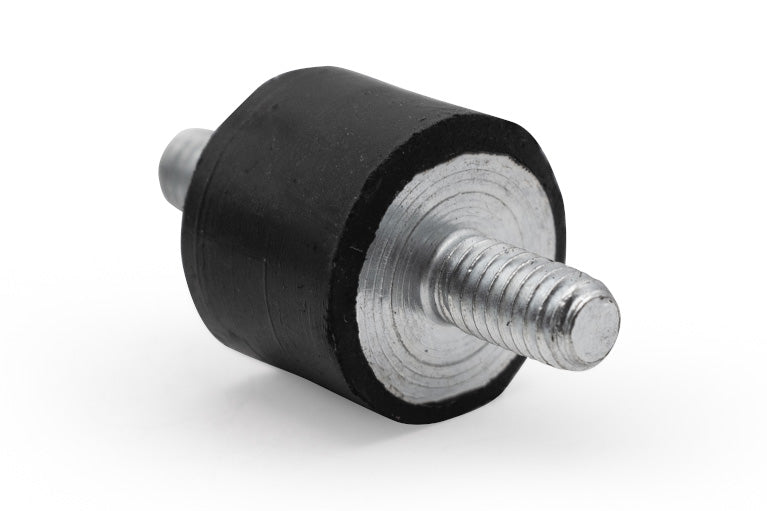 Vibration Isolators 2" x 3/4" | Natural Rubber $4.79
  Rubber Vibration Isolator Mounts 9/16" x 1/2" | Natural Rubber $2.79 Vibration Isolation Mount - 2 Studed $2.59
  Vibration Isolators 1" x 1" | Natural Rubber $3.79
  Vibration Isolator 1" x 3/8" | Neoprene $3.29
  Vibration Isolation Feet 1.29" x 1 3/8" | Natural Rubber $3.79
  Isolation Rubber Mounts $3.79
  Vibration Isolators 3" x 2 1/4" | Natural Rubber $19.99
  Vibration Isolators 1 1/2" x 1" | Natural Rubber $3.79
The Importance of Hardness in Industrial Applications
The durometer of a rubber part influences its sealing ability, wear resistance, and vibration dampening properties. If a component is out of specification by even a few points on the Shore scale, the entire mechanical system can be compromised.
Material Integrity and Verification


Understanding hardness testing gives you a vital tool for verifying material shipments. Hardness acts as a proxy for the quality of the vulcanization process. If a batch of rubber is under-cured, it will register as softer than the specification. If it is over-cured, it may be too hard and prone to cracking.
Predicting Service Life
Environmental factors such as heat and chemical exposure cause rubber to harden over time. By establishing a baseline and performing periodic tests, maintenance teams can identify when a part is nearing the end of its useful life before a failure occurs.
Understanding Shore Scales: How to Check Durometer of Rubber Accurately
Selecting the correct scale is the first step in the measurement process. Rubber hardness is typically measured on the Shore A or Shore D scale. Using the wrong scale will result in inaccurate data that cannot be compared to industry standards.
- Shore A scale: This is the industry standard for flexible elastomers. The indentor is a hardened steel rod with a truncated cone point. It covers everything from soft sponge rubber to hard automotive tires. Most industrial mounts produced by Enterprise Rubber fall within the 40A to 80A range.
- Shore D scale: This is reserved for much harder materials. The indentor is a sharp 30-degree angle point. If a rubber is so rigid that the Shore A indentor cannot make a mark, a Shore D gauge is required. This is common for hard plastics and high-durometer urethanes.
Comparison Table: Shore A vs. Shore D
| Material Example | Typical Shore A | Typical Shore D |
|---|---|---|
| Rubber band | 20A - 30A | N/A |
| Pencil eraser | 40A | N/A |
| Door seal | 55A | N/A |
| Car tire tread | 70A | N/A |
| Hard hat | N/A | 75D - 85D |
Technical Standards: How to Test Durometer of Rubber Correctly
Standardized testing ensures that a reading taken in one facility matches a reading taken in another. Following ASTM D2240 provides the necessary framework for professional results.
Sample Preparation Requirements
To understand how to measure durometer of rubber correctly, you must first prepare the sample according to these parameters:
- Thickness: The material must be at least 6mm, or 0.24 inches, thick. If the rubber is thinner, you can stack several layers of the same material to reach the thickness. Testing a thin layer directly on a hard table results in a false high reading.
- Surface area: The test area must be wide enough to allow the pressure foot of the gauge to sit entirely flat.
- Conditioning: Rubber should be allowed to stabilize at room temperature for at least three hours before testing.
The Procedure for Precise Measurement
- Place the rubber sample on a flat, level, and hard surface.
- Hold the durometer gauge perpendicular to the surface of the rubber.
- Apply the pressure foot to the sample with a firm, steady motion.
- Record the reading immediately for initial hardness or after a set interval for timed hardness.
Material Science: Natural vs. Synthetic Response to Testing
During testing, you will notice that different polymers react differently to the indentor. This is due to a phenomenon called creep, or stress relaxation.
Natural Rubber
Natural rubber is highly resilient. When you apply a durometer gauge, the needle usually stays relatively stable. Because natural rubber has excellent snap-back, the difference between an instantaneous reading and a 15-second delayed reading is minimal.
Synthetic Elastomers
Synthetic compounds, including nitrile, EPDM, and silicone, often exhibit more viscous behavior. When you press the gauge down, you may see the needle slowly drop. For example, the initial reading might be 70A, but after 10 seconds, it settles at 65A.
- Enterprise Rubber tip: When testing synthetics, always specify the dwell time, such as “70 Shore A at 1 second.” This ensures that everyone in the supply chain is measuring at the same point in the material's relaxation curve.
Why Choose Enterprise Rubber for Your Molded Components?
Selecting a partner for rubber manufacturing involves more than just finding a supplier. You need a team that understands the science behind the material. Enterprise Rubber stands out in the industry for several key reasons:
- Strict quality control: We live by these testing standards in our own facility. Every batch of material undergoes rigorous hardness and tensile verification before it reaches your floor.
- Custom compounding expertise: We develop custom rubber formulations tailored to your specific environment. Whether you need oil resistance or high-temperature stability, we match the durometer to your application requirements.
- Engineering support: Our team provides technical guidance from the design phase to the final production run. We help you choose the ideal Shore hardness to ensure your parts provide the perfect balance of flexibility and durability.
- Inventory consistency: We maintain tight tolerances on Shore hardness across different production runs. This means the 60A mount you buy today will perform exactly like the one you bought last year.
Common Pitfalls When You Test Durometer of Rubber
Even with the right equipment, certain variables can skew your results. Being aware of these helps troubleshoot inconsistent data during the quality control process.
| Variable | Effect on Measurement | Mitigation Strategy |
|---|---|---|
| Applied force | Inconsistent pressure changes the depth of indentation. | Use a constant-load test stand where possible. |
| Edge proximity | Testing too close to the edge gives a false low reading. | Stay at least 12mm, or 0.5 inches, from any edge. |
| Surface finish | Very rough surfaces prevent the pressure foot from sealing. | Test on a smooth area of the molded part. |
| Temperature | Rubber softens as it gets warmer. | Always test at standard room temperature, 23°C ± 2°C. |
The Stacking Effect
A common question when learning how to check a durometer of rubber is whether stacking thin pieces of rubber is truly accurate. While ASTM D2240 allows for stacking to reach the 6mm requirement, it can introduce air gaps between layers. These microscopic gaps act as cushions, which might cause a slightly lower hardness reading than a solid 6mm block.
For the most accurate results, we recommend using a single, solid test plaque or coupon molded from the same batch of rubber as your final parts.
Ensuring Precision in Your Infrastructure
Mastering durometer evaluation is a fundamental requirement for anyone involved in the procurement or maintenance of industrial elastomers. By using the correct Shore scale, preparing samples to ASTM standards, and accounting for environmental variables, you ensure your rubber components are up to the task.
At Enterprise Rubber, we are committed to providing the highest quality molded rubber products. Our focus on material science and testing allows us to deliver components that exceed industry standards for durability and performance.
Need Rubber Components With the Right Durometer?
Custom compounds, quality control, and engineering support for rubber parts built to perform.
Request a QuoteHow is rubber durometer measured?
Rubber durometer is measured by pressing a standardized indenter into the material and recording its resistance to indentation on the appropriate Shore scale.
Which durometer scale is used for rubber?
Shore A is commonly used for flexible rubber and elastomer components. Harder materials may require another scale, depending on the material and applicable testing standard.
Can you test durometer on a finished rubber part?
Sometimes, but curved, thin, textured or irregular surfaces can produce unreliable readings. A properly prepared test specimen may be required for accurate verification.
Does a higher durometer mean stronger rubber?
No. A higher durometer indicates greater resistance to indentation. It does not automatically mean the rubber has greater tensile strength, tear resistance or load capacity.
Why should rubber durometer be tested in multiple locations?
Multiple readings help identify material variation and reduce the influence of surface conditions, edges or an isolated measurement error.