



Maintenance For Anti Vibration Mounts for Diesel Generators
A diesel generator represents a massive capital investment and a critical safety net for operational continuity. However, even the most robust engine is susceptible to the destructive forces of its own kinetic energy. While maintenance crews often prioritize fuel systems and electrical outputs, the foundational support system, specifically the anti vibration mounts for diesel generator units, is what determines the ultimate lifespan of the machine.
At Enterprise Rubber, we have spent decades engineering vibration control solutions that do more than just “quiet” a machine. We design components that serve as a mechanical barrier against structural fatigue. When these mounts are neglected, the resulting harmonic resonance can lead to catastrophic failure in cooling systems, control panels, and fuel lines.
 Vibration Isolators 1" x 3/4" | Natural Rubber
$2.59
Vibration Isolators 1" x 3/4" | Natural Rubber
$2.59
 Rubber Vibration Mount 1" x 1/2" | Natural Rubber
$2.79
Rubber Vibration Mount 1" x 1/2" | Natural Rubber
$2.79
 Vibration Isolators 3 1/8" x 3" | Natural Rubber
$29.99
Vibration Isolators 3 1/8" x 3" | Natural Rubber
$29.99
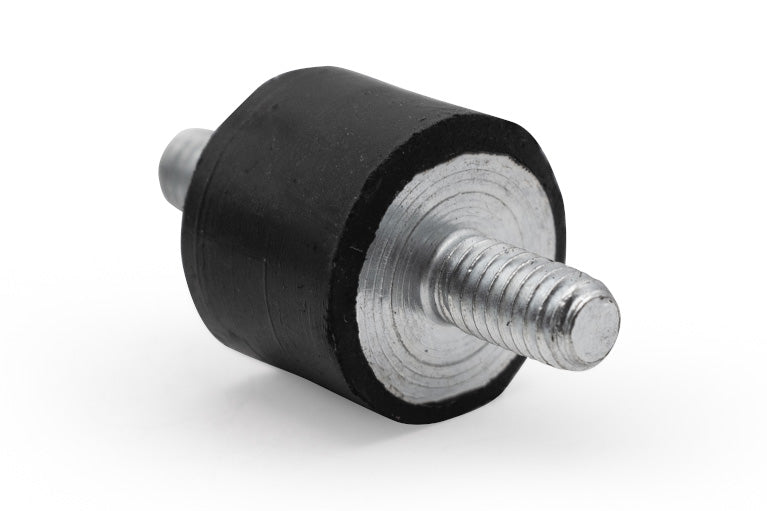 Vibration Isolators 2" x 3/4" | Natural Rubber
$4.79
Vibration Isolators 2" x 3/4" | Natural Rubber
$4.79
 Rubber Vibration Isolator Mounts 9/16" x 1/2" | Natural Rubber
$2.79
Vibration Isolation Mount - 2 Studed
$2.59
Rubber Vibration Isolator Mounts 9/16" x 1/2" | Natural Rubber
$2.79
Vibration Isolation Mount - 2 Studed
$2.59
 Vibration Isolators 1" x 1" | Natural Rubber
$3.79
Vibration Isolators 1" x 1" | Natural Rubber
$3.79
 Vibration Isolator 1" x 3/8" | Neoprene
$3.29
Vibration Isolator 1" x 3/8" | Neoprene
$3.29
 Vibration Isolation Feet 1.29" x 1 3/8" | Natural Rubber
$3.79
Vibration Isolation Feet 1.29" x 1 3/8" | Natural Rubber
$3.79
 Isolation Rubber Mounts
$3.79
Isolation Rubber Mounts
$3.79
 Vibration Isolators 3" x 2 1/4" | Natural Rubber
$19.99
Vibration Isolators 3" x 2 1/4" | Natural Rubber
$19.99
 Vibration Isolators 1 1/2" x 1" | Natural Rubber
$3.79
Vibration Isolators 1 1/2" x 1" | Natural Rubber
$3.79
The Critical Role of Anti Vibration Mounts for Diesel Generator Stability
To understand the maintenance requirements, one must first understand the physics of the application. A diesel engine operates through a series of timed internal explosions. This creates both primary and secondary vibrations. Without high-quality anti vibration mounts for diesel generator sets, this energy is transferred directly into the mounting skid and the building’s floor.
Our engineers focus on achieving high vibration isolation efficiency by selecting the correct elastomer compounds to match the engine’s disturbing frequency. When the mounting system is in peak condition, it absorbs up to 98% of this kinetic energy, protecting the generator’s internal sensitive electronics and preventing the unit from shifting or “walking” during high-torque start-up cycles.


Technical Audit: Inspecting Industrial Rubber Isolators
Maintenance is not a passive task. It requires a structured, technical audit to ensure the rubber is still performing within its designed elastic zone. We recommend the following inspection protocols:
1. Visual Assessment of Rubber Integrity
The most common cause of failure in generator mounts is environmental degradation. During your walk-around, look for:
- Ozone cracking: Small, jagged cracks on the surface of the rubber, often caused by exposure to UV light or high-voltage electrical equipment in the vicinity.
- Chemical softening: If the rubber feels tacky or soft, it has likely been contaminated by diesel fuel or lubricants. We utilize oil-resistant Neoprene and Nitrile for these environments, but even the best materials require cleaning.
- Metal corrosion: Inspect the metal brackets and studs. If the steel components are rusting, it can compromise the rubber-to-metal bonding, leading to a sudden detachment.
2. Measuring Static Deflection
Every mount is designed to compress a specific amount under the weight of the generator. This is known as static deflection.
- The test: Measure the height of the mount when the engine is off.
- The standard: If the mount has compressed 15-20% beyond its original factory specifications, the rubber has reached a permanent set and can no longer provide adequate dampening.
Understanding Your Hardware: Captive Anti Vibration Mounts for Diesel Generator vs. Heavy-Duty Engine Mounts
Not all generator mounts are created equal. Enterprise Rubber manufactures different profiles for different installation environments.
Captive Anti-Vibration Mounts
For generators located on trailers, ships, or in earthquake-prone zones, captive anti-vibration mounts are mandatory. These feature an internal interlocking steel mechanism.
- Maintenance note: In these units, you must check for metal-to-metal contact. If the internal safety snubbers are touching the frame during idle, the rubber element has failed, and the mount is essentially short-circuiting the vibration directly into the floor.
Heavy-Duty Engine Mounts for Stationary Units
For large, multi-megawatt stationary units, heavy-duty engine mounts provide a larger surface area for energy dissipation.
- Maintenance note: These units often utilize high-damping natural rubber. Because they carry such massive loads, check the level of the generator frame. An uneven mount can cause the drive shaft to misalign with the alternator, leading to bearing failure.
The Science of Rubber-to-Metal Bonding
One of the unique advantages of choosing Enterprise Rubber is our proprietary rubber-to-metal bonding process. In a generator application, the mount is under constant shear and tension. If the chemical bond between the elastomer and the steel plate fails, the generator can shift off its base.
When inspecting your mounts, look for:
- Peeling at the interface: Any gap between the rubber and the metal plate.
- Rust creep: Rust forming underneath the rubber edge, which lifts the bond.
- Heat discoloration: If the metal hardware shows signs of extreme heat, such as bluing, it may indicate that the rubber is working too hard due to a mechanical issue with the engine itself.
Environmental Management for Vibration Isolation Efficiency
To maximize the vibration isolation efficiency of your products, the environment must be managed as carefully as the machinery.
Temperature Controls
Rubber is sensitive to heat. In an enclosed generator room, ambient temperatures can skyrocket. Ensure that airflow is directed away from the mounting points. If a mount is operating in an environment exceeding 80°C, or 176°F, consistently, its service life may be significantly reduced.
Fluid Containment
Diesel and oil are solvents. We recommend installing drip shields above the mounts if the engine is prone to minor leaks. This prevents fluids from pooling around the industrial rubber isolators, extending their life by years.
Are you seeing signs of wear on your current mounts?
Don't wait for failure. Reach out to Enterprise Rubber today and secure your power infrastructure.
Contact UsReplacement Schedule: When to Call Us
While maintenance can extend the life of your components, rubber is a consumable material. Even under perfect conditions, we recommend a full system replacement of heavy-duty engine mounts every 5 to 7 years.
Immediate replacement is required if:
- The generator’s vibration is felt in adjacent rooms.
- The rubber shows cold flow, meaning the rubber is being squeezed out of the metal casing.
- The engine height has dropped significantly, causing stress on the exhaust manifold.
Why Choose Enterprise Rubber for Your Replacement Mounts?
When it comes time to replace your anti vibration mounts for diesel generator units, why settle for generic parts? We offer:
- Custom compounding: We can adjust the Shore A hardness of our rubber to match the specific RPM of your engine.
- American manufacturing: High-quality control standards that imported parts simply cannot match.
- Engineering support: We do not just ship parts; we help you calculate the load and frequency requirements for your specific installation.
Proactive maintenance of your generator’s mounting system is the most cost-effective way to prevent catastrophic engine damage. By monitoring the health of your industrial rubber isolators and ensuring the integrity of the rubber-to-metal bonding, you ensure that your power system remains a reliable asset rather than a vibration-induced liability.