



Why Is Rubber Used for Anti Vibration Mounts: Shock Absorption
When heavy industrial machinery, large air compressors, or commercial HVAC units cycle on, they generate a massive amount of internal motion. This motion creates a shock wave of kinetic energy that naturally wants to travel down the machine's legs and straight into your facility's floor. Without an engineered dampening system in place, this continuous shaking can cause severe mechanical stress, loosen vital electrical connections, and rattle expensive internal bearings to pieces. Plant managers, engineers, and DIYers looking to protect their hardware all face the same core question: why is rubber used for anti vibration mounts instead of regular metal brackets or hard plastics?
The answer comes down to how engineered rubber handles energy. Instead of letting vibrations pass right through like a bridge, high-quality rubber isolation functions as a protective shield. It catches the energy, slows it down, and completely neutralizes it before it can cause permanent structural damage.
 Vibration Isolators 1" x 3/4" | Natural Rubber
$2.59
Vibration Isolators 1" x 3/4" | Natural Rubber
$2.59
 Rubber Vibration Mount 1" x 1/2" | Natural Rubber
$2.79
Rubber Vibration Mount 1" x 1/2" | Natural Rubber
$2.79
 Vibration Isolators 3 1/8" x 3" | Natural Rubber
$29.99
Vibration Isolators 3 1/8" x 3" | Natural Rubber
$29.99
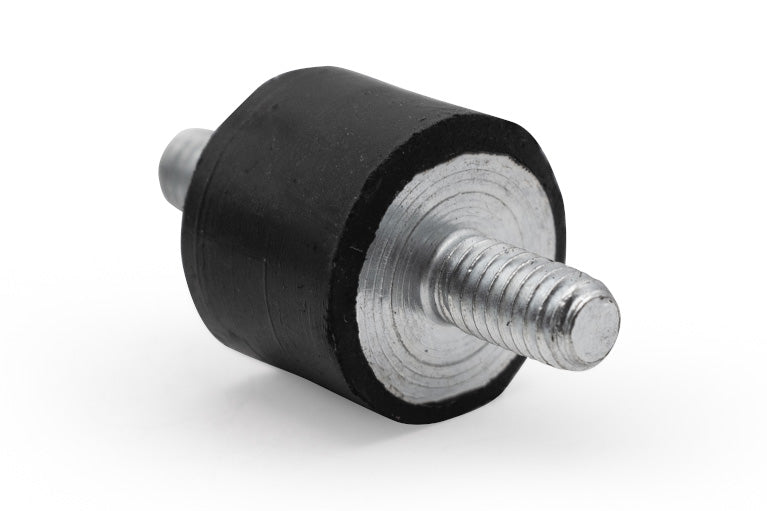 Vibration Isolators 2" x 3/4" | Natural Rubber
$4.79
Vibration Isolators 2" x 3/4" | Natural Rubber
$4.79
 Rubber Vibration Isolator Mounts 9/16" x 1/2" | Natural Rubber
$2.79
Vibration Isolation Mount - 2 Studed
$2.59
Rubber Vibration Isolator Mounts 9/16" x 1/2" | Natural Rubber
$2.79
Vibration Isolation Mount - 2 Studed
$2.59
 Vibration Isolators 1" x 1" | Natural Rubber
$3.79
Vibration Isolators 1" x 1" | Natural Rubber
$3.79
 Vibration Isolator 1" x 3/8" | Neoprene
$3.29
Vibration Isolator 1" x 3/8" | Neoprene
$3.29
 Vibration Isolation Feet 1.29" x 1 3/8" | Natural Rubber
$3.79
Vibration Isolation Feet 1.29" x 1 3/8" | Natural Rubber
$3.79
 Isolation Rubber Mounts
$3.79
Isolation Rubber Mounts
$3.79
 Vibration Isolators 3" x 2 1/4" | Natural Rubber
$19.99
Vibration Isolators 3" x 2 1/4" | Natural Rubber
$19.99
 Vibration Isolators 1 1/2" x 1" | Natural Rubber
$3.79
Vibration Isolators 1 1/2" x 1" | Natural Rubber
$3.79
Why Is Rubber Used for Anti Vibration Mounts?
To understand why rubber is used for anti vibration mounts, it helps to look at a unique physical property known as viscoelasticity. Most everyday materials are either strictly elastic (like a steel spring that bends and snaps back with the same force) or strictly viscous (like a thick fluid that resists movement but doesn't hold its shape).
Engineered rubber is special because it acts like a hybrid of both a flexible solid and a thick liquid:
- The Elastic Trait: When a motor shakes or a heavy load drops, the rubber mount safely stretches and flexes to cushion the impact.
- The Viscous Trait: As the rubber deforms, its internal molecular chains slide against each other. This action creates internal friction, which traps the incoming kinetic energy wave.
This internal friction triggers a phenomenon called a hysteresis loop. The rubber takes the hard, destructive shaking energy and converts it into tiny bits of harmless thermal energy (heat) that simply fade away into the air.
Various Benefits of Industrial Rubber Vibration Isolation
Investing in a complete system for industrial rubber vibration isolation provides a multi-layered line of defense for your equipment, your building, and your bottom line. Leaving machinery unmanaged creates an array of hidden expenses that quietly ruin your operational efficiency.
1. Extending Equipment Life (MTBF)
Continuous, violent shaking is a primary cause of unexpected equipment failure. It causes precise mechanical alignments to drift out of calibration and can even lead to costly refrigerant leaks in commercial cooling lines. Using rubber isolators to absorb up to 95% of these harsh forces directly extends your machine's mean time between failures (MTBF).
2. Stopping Loud Sound Waves with Noise Reduction Mounts
Noise in a plant or shop is rarely just an acoustic issue; it is a visible sign of physical force bleeding into your structural support beams. When an uninsulated machine shakes against a hard floor, the whole building acts like a giant stereo speaker. Utilizing professional-grade noise reduction mounts cuts off the physical pathway of the sound wave, trapping the decibels at the machine's feet and keeping your workspace quiet and compliant.
3. Preventing Machine "Walking" and Floor Damage
Heavy machinery that experiences sudden shifts in torque can physically slide or "walk" across smooth concrete floors during high-load cycles. This movement stretches pipe connections, breaks electrical conduits, and creates serious workplace safety hazards. Rubber mounting brackets provide a high-friction surface grip that locks your equipment securely in place without forcing you to drill permanent, destructive anchor bolts into your floors.
Choosing the Right Hardware: Compressors and HVAC Units
Not all rubber compounds react the same way under continuous pressure. Using cheap, generic rubber feet often backfires because standard rubber quickly hardens, dries out, or cracks when it gets hot or touches oil. For true protection, the elastomer must be matched to the exact machine and environment.
Heavy-Duty Rubber Mounts for Air Compressor Lines
Air compressors generate intense, high-frequency internal movements that can easily destroy components if they are not properly managed. Additionally, compressor environments frequently feature synthetic oils, fuels, and chemical lubricants. Utilizing heavy-duty rubber mounts for air compressor units provides excellent environmental resistance against these fluids so the rubber won't degrade, while keeping the machine firmly anchored to the floor.
Weatherproof Anti Vibration Mounts for Air Conditioners
Selecting durable anti vibration mounts for air conditioners is a vital step for protecting outdoor HVAC hardware. Rooftop air handlers and cooling units are continuously exposed to intense sunlight, rain, and outdoor ozone. While a compound like Nitrile rubber is best for oil-heavy compressor environments, outdoor air conditioning units require Neoprene because it naturally resists weather and ozone damage, keeping your HVAC system running smoothly for years.
Material Selection: Matching the Elastomer to the Job
To get the longest life out of your isolation setup, you must select the correct underlying rubber compound. Through the process of professional custom rubber molding, components can be mixed and tailored using three primary materials:
- Natural Rubber: Offers the highest level of flexibility, excellent bounce recovery, and unmatched low-frequency vibration pulling capabilities. It is the premier choice for indoor machinery foundations and high-deflection setups. Neoprene (Polychloroprene): Highly resistant to outdoor weathering, direct UV sunlight, and atmospheric ozone. This makes it the industry standard for outdoor HVAC units and rooftop installations. Nitrile (NBR): Highly resistant to petroleum products, hydraulic fluids, and engine lubricants. It is the mandatory choice for industrial manufacturing lines and automated workshop equipment.
Engineering Your Setup: Weight vs. Flex
Achieving total vibration suppression is an exact science. You should never pick an isolator based solely on the size of a bolt hole. Instead, mounts must be carefully positioned relative to the machine's actual center of gravity and calculated using two separate forces:
- Static Weight: The dead weight of the machinery when it is turned completely off and sitting idle.
- Dynamic Load: The active physical force and twisting motion created when the motor starts up and runs at full speed.
Eliminating Vibrations with Custom Rubber Molding
Every piece of industrial equipment has a specific speed at which it shakes, known as its disturbing frequency. While standard off-the-shelf pads work well for basic applications, complex or extra-heavy industrial machinery often requires custom rubber molding. Custom molding allows engineers to adjust the stiffness of the rubber compound to the exact target needed to completely cancel out a specific motor's unique vibration pattern.
Partner with Enterprise Rubber for Lasting Solutions
Fixing complex industrial vibration and noise transmission requires a precise combination of quality materials, chemical compounding expertise, and trusted manufacturing standards.
At Enterprise Rubber, we specialize in manufacturing durable, American-made industrial rubber solutions engineered to withstand the toughest mechanical and environmental demands. Whether you need weather-ready anti vibration mounts for air conditioners, rugged oil-resistant rubber mounts for air compressor lines, or a completely unique custom rubber molding setup tailored to your exact machinery, our team delivers the reliability and quality your business depends on.